
Tuition

10 Ways to Help Your Child Improve

10 Ways to Help Your Child Improve Their SATs Results

Preparing for SATs in Leicester can feel like a big task for both children and parents. Year 6 is an important time in primary school because children prepare for their end-of-Key-Stage-2 tests in English and Maths. Many children feel worried about these tests, especially when they find certain subjects difficult or have trouble remembering what they have learnt. Parents often want to help but may not know where to start or how much revision their child needs. The good news is that SATs preparation does not have to be stressful. Children can improve their knowledge and feel more confident when they follow a steady study routine, practise different types of questions and get support from their parents and teachers. Small steps, such as reading for a short time each day, practising Maths questions and learning new words, can make a difference over time. It is also important to give children enough time to play, rest and enjoy their childhood while they prepare for their tests. If your child is in Year 6, you can support their learning at home with a few helpful changes. Here are ten useful ways to help your child improve their SATs results and feel ready for their upcoming tests. Table of Contents Make a Simple Daily Study Timetable Encourage Your Child to Read Every Day Help Your Child Practise Maths at Home Give Extra Attention to English Grammar and Punctuation Use SATs Practice Papers to Build Confidence Teach Your Child How to Manage Their Time Find Out Which Subjects Your Child Finds Difficult Make Learning Fun with Games and Activities Make Sure Your Child Gets Enough Rest and Sleep Consider Extra Support from a Tuition Centre How Can Parents Support SATs Preparation at Home? Understanding What Happens During KS2 SATs Common Mistakes to Avoid During SATs Preparation Frequently Asked Questions About SATs Preparation Final Thoughts 1. Make a Simple Daily Study Timetable A study timetable can help children understand what they need to learn each day. Without a plan, children may spend too much time on one subject and forget to practise another. A short and clear timetable can keep their learning on track without making them feel tired. Start by asking your child which subjects they enjoy and which ones they find difficult. Use their answers to plan their study time. For example: Monday – Maths: Practise multiplication, division and fractions. Tuesday – English: Read a short story and answer questions about it. Wednesday – Grammar: Learn about punctuation, spelling and sentence structure. Thursday – Maths: Work on word problems and number questions. Friday – Reading: Read a book and explain what happened in the story. Saturday – Revision: Go through topics covered during the week. Keep each study session short. Around 20 to 30 minutes can be a good starting point, depending on your child’s age and concentration. Give them breaks between subjects so they have time to relax. 2. Encourage Your Child to Read Every Day Reading plays an important part in SATs preparation. Children need good reading skills to understand passages, find information and answer questions. Reading also helps them learn new words and understand how sentences are written. You do not need to ask your child to read long books every day. Choose books and stories that match their age and interests. Here are some ways to make reading part of their daily routine: Read together: Take turns reading a page from a storybook. This can help children learn new words and improve their reading. Ask questions: After reading, ask what happened in the story and who the main characters were. Discuss new words: Talk about words your child does not understand and explain their meanings. Try different books: Let your child read stories, short articles, poems and information books. Visit the library: Allow your child to choose books that interest them. Reading should feel enjoyable, not like another school test. Give your child time to understand the story and share their thoughts. 3. Help Your Child Practise Maths at Home Maths is an important part of the KS2 SATs tests. Children need to understand numbers, calculations, fractions, measurements and other topics covered during primary school. Some pupils may know how to solve a question but struggle when it is written as a word problem. Parents can help by adding small Maths activities to daily life. These activities allow children to use their Maths knowledge outside their school lessons. Try these activities at home: Practise times tables: Spend a few minutes each day asking multiplication questions. Use money: Ask your child to work out the cost of a few items when shopping. Measure ingredients: Let them measure flour, milk or sugar while helping with cooking. Tell the time: Ask your child to work out how long it will take to complete an activity. Solve number puzzles: Use simple Maths games to help them practise calculations. If your child gets an answer wrong, ask them to show how they worked it out. This will help you understand where they need more practice. Avoid giving them the answer straight away. 4. Give Extra Attention to English Grammar and Punctuation English grammar and punctuation are important parts of the Year 6 SATs tests. Children need to understand how words, sentences and punctuation marks work together. They may also need to identify different word types and correct mistakes in sentences. Parents can help children learn these skills through short activities. Start with the basics, such as capital letters, full stops, commas and question marks. Once your child understands these, move on to other topics, including: Nouns: Words used for people, places, animals and things. Verbs: Words that show an action or state, such as run, write and think. Adjectives: Words that describe people, places or things. Adverbs: Words that give more information about an action. Tenses: Learning how to write about the past, present and future. Punctuation: Understanding where to use commas, apostrophes, speech marks and other punctuation marks. Ask your child to

10 Ways to Help Your Child Improve Their SATs Results Read Post »

English and Maths Tutor Cost

How Much Does an English and Maths Tutor Cost in Leicester?

Most parents in Leicester can expect to pay about £15 to £35 an hour for a private English or Maths tutor, based on 2026 prices we found online. Experienced tutors can charge £40 or more. The price depends on the tutor, your child’s level and the type of lesson. How much does an English and Maths tutor cost in Leicester? There is no single price. A new tutor teaching a Year 4 child may charge less than an experienced tutor preparing a student for GCSE exams. One-to-one lessons cost more per child than small group lessons, and online and classroom lessons are priced in different ways. This guide covers primary and GCSE prices, a comparison table, budget examples and tips. The prices come from other websites, not from one provider, so ask for a current quote. Table of Contents How Much Does an English and Maths Tutor Cost in Leicester? How Much Does a Private English Tutor Cost in Leicester? How Much Does a Maths Tutor Cost in Leicester? How Much Does GCSE English and Maths Tuition Cost? Is One-to-One Tuition More Expensive Than Group Tuition? Is Online English and Maths Tuition Cheaper Than Classroom Tuition? What Affects the Cost of Private English and Maths Tuition? How Much Should Parents Budget for Weekly Tuition? How to Find Affordable English and Maths Tuition in Leicester? Questions to Ask Before Booking an English and Maths Tutor Frequently Asked Questions Find English and Maths Tuition in Leicester Sources How Much Does an English and Maths Tutor Cost in Leicester? No official price list exists for Leicester, so we compared several sources. Each one measures prices in a different way, so the numbers do not match. The FindTutors 2026 report looked at 38,602 tutor listings in 20 UK cities and shows the median advertised price. The UK median is £20 an hour in person and £24 online. Leicester’s in-person median is £15, but that covers all subjects, and the report does not give the number of Leicester listings. Advertised prices can also differ from final prices. Other sources are higher. MyTutor lists ten Leicester English tutors at £26 to £50 an hour, with no date. BizHub365 gives £15 to £25 for primary and £20 to £35 for GCSE in Leicester, but it does not explain its method and earns money from tutor listings. Atom Learning reports UK averages of £27 for ages 7 to 11 and £30 for GCSE, though its text describes 2025 prices. Tuition Type Estimated Hourly Cost What Parents Should Know Primary English and Maths £15 to £27 No source splits English from Maths at primary level. GCSE English £20 to £35 UK median of £23.50 in person and £25 online (FindTutors). GCSE Maths £20 to £35 UK median of £20 in person and £25 online (FindTutors). English tutors listed in Leicester £26 to £50 Each tutor sets a price. This is a list, not an average. Small group, per child £12 to £35 £12 to £20 in Leicester, £20 to £35 across the UK. Experience changes the price. Leading Tuition, a tutoring company, lists specialists at £45 to £70 an hour (August 2026). That is higher than other sources, so treat the table as a guide, not an official price list. How Much Does a Private English Tutor Cost in Leicester? Here is how the English tuition cost changes by level. For primary children, a tutor may teach reading and comprehension, which means understanding what a text says, plus spelling and sentence writing. The sources give one primary price, not a separate English price, so use the primary range in the table. At GCSE, lessons cover English Language and English Literature. FindTutors shows a UK median of £23.50 an hour in person and £25 online. A tutor with exam experience may charge more, since marking essays takes time. How Much Does a Maths Tutor Cost in Leicester? Maths builds step by step, so a tutor starts by finding the step a child missed. Here is how the Maths tutor cost changes by level. Primary lessons cover times tables, number skills, fractions, decimals and percentages. FindTutors shows a UK median of £25 for primary school and £20 for secondary school, so primary is not always cheaper. At GCSE, a tutor teaches harder topics, exam skills and problem-solving. The GCSE Maths tutor cost is about £20 an hour in person and £25 online in the FindTutors data. How Much Does GCSE English and Maths Tuition Cost? GCSE tuition focuses on exams, and most sources show £20 to £35 an hour. A tutor may go through exam-style questions, set past-paper practice and explain hard topics. Some families book one-to-one exam preparation in the months before the exams. No tutor can promise a grade, so be careful with anyone who does. Is One-to-One Tuition More Expensive Than Group Tuition? Yes, one-to-one lessons cost more per child in the sources we found. The difference comes from how the tutor shares time. In one-to-one tuition in Leicester, the tutor teaches your child alone and can change the pace at any moment. This suits shy children and those who are far behind. In a small group, BizHub365 lists £12 to £20 per student in Leicester, and Leading Tuition lists £20 to £35 per child across the UK. Is Online English and Maths Tuition Cheaper Than Classroom Tuition? Not always. Many parents expect online lessons to cost less, but the data does not show that. In the FindTutors 2026 data, the UK median is £24 an hour online and £20 in person. GCSE Maths is £25 online and £20 in person, and GCSE English is £25 online and £23.50 in person. So online English and Maths tuition was not cheaper in this report. Online lessons save travel time and fuel or bus fares, and give you more tutors to pick from. Classroom lessons give a child a calm place away from screens. Some platforms add fees, so check the final price. What Affects the Cost of Private

How Much Does an English and Maths Tutor Cost in Leicester? Read Post »

GCSE Maths Grades

How to Improve GCSE Maths Grades: A Simple Guide for Students

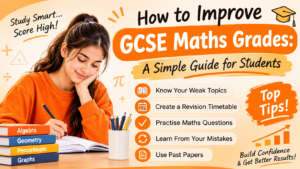
GCSE Maths is an important subject for students, but getting good marks is not always easy. Some students understand the lessons in class but struggle when they try to answer questions on their own. Others find certain topics difficult, make small mistakes in exams or run out of time before completing the paper. These problems can affect their confidence and make Maths feel harder than it needs to be. The good news is that students can improve their Maths grades with regular practice, a clear study plan and the right support. They do not need to spend hours studying every day. Small steps, such as practising a few questions, reviewing mistakes and learning how to solve problems, can make a big difference over time. If you are wondering how to improve GCSE Maths grades, this guide shares practical tips that students can follow at home and school. It also explains how parents can support their children and when extra tuition may help. Table of Contents Understand Which GCSE Maths Topics You Find Difficult Create a Simple GCSE Maths Revision Timetable Practise Maths Questions Every Day Learn From Your Mistakes Use GCSE Maths Past Papers for Practice Understand the Maths Methods Instead of Memorising Answers Improve Your Time Management During Exams Learn How to Answer Word Problems Ask for Help When You Do Not Understand a Topic Use Online Resources to Support GCSE Maths Revision Build Confidence With Small Learning Goals How Parents Can Help Their Children Improve GCSE Maths Grades How Can GCSE Maths Tuition Help Students Improve? Frequently Asked Questions About Improving GCSE Maths Grades Final Thoughts 1. Understand Which GCSE Maths Topics You Find Difficult Before starting revision, students should understand which parts of Maths they find difficult. Trying to study every topic at once can feel confusing and waste time. Some students are good at basic calculations but struggle with algebra. Others find geometry, graphs or word problems more challenging. Start by making a list of topics that need more attention. For example: Algebra: Practise solving equations, simplifying expressions and working with unknown numbers. Fractions: Learn how to add, subtract, multiply and divide fractions. Percentages: Practise percentage increases, decreases and finding percentages of amounts. Geometry: Understand angles, shapes, area, perimeter and volume. Graphs: Learn how to read, draw and understand different types of graphs. Ratio and proportion: Practise sharing amounts and comparing quantities. Probability: Learn how to calculate the chances of different events. Once students know their weak areas, they can spend more time practising those topics instead of repeating questions they already understand. 2. Create a Simple GCSE Maths Revision Timetable A revision timetable helps students organise their study time. Without a plan, it is easy to leave difficult topics until the last minute. Students should create a timetable that fits around school, homework and other activities. There is no need to study Maths for several hours every day. A simple weekly plan could look like this: Day Revision topic Monday Algebra Tuesday Fractions and decimals Wednesday Percentages Thursday Geometry Friday Ratio and proportion Saturday GCSE Maths practice paper Sunday Review mistakes and revise weak topics Students can spend around 30 to 45 minutes on each revision session, depending on their needs. It is also important to take short breaks. Studying for a long time without rest can make it harder to remember information. 3. Practise Maths Questions Every Day Reading Maths notes is helpful, but it is not enough to improve exam results. Students need to solve questions themselves. Regular practice helps students understand how different questions work. It also makes them more comfortable with using formulas and following calculation steps. A good way to practise is to: Choose one Maths topic. Read through an example question. Try a few questions without looking at the answer. Check the answers carefully. Repeat the questions that were difficult. For example, if a student is struggling with percentages, they can practise finding 10%, 20% and 25% of different amounts before moving on to harder questions. Starting with easier questions helps build confidence. Students can then move towards more difficult problems as their understanding improves. 4. Learn From Your Mistakes Making mistakes is a normal part of learning Maths. However, students should not ignore their wrong answers or move straight to the next question. Every mistake can help them understand what needs more practice. For example, a student may get an algebra question wrong because they have made a calculation error. Another student may understand the calculation but use the wrong method. Both mistakes need different types of practice. One useful method is to keep a Maths mistake notebook. Students can write down: The question they got wrong. The correct answer. The step where they made a mistake. An explanation of the correct method. Another similar question to practise. They should return to this notebook regularly. Looking at previous mistakes can help students avoid repeating them in future tests. 5. Use GCSE Maths Past Papers for Practice Past papers are one of the most useful resources for GCSE Maths revision. They help students understand the types of questions that may appear in their exams. They also give students an idea of how questions are worded and how marks are awarded. When practising past papers, students should: Choose a paper that matches their exam board. Complete questions without looking at the answers. Use a timer to practise working within exam time. Check their answers using the mark scheme. Review questions they could not answer. Students should not only focus on their total marks. They should also look at the questions they got wrong and understand why. Practising past papers under timed conditions can also help students become more confident before their GCSE exams. 6. Understand the Maths Methods Instead of Memorising Answers Memorising formulas and answers may help with some questions, but it does not always work when the exam includes a problem that students have not seen before. Students should understand why a method works and how to

How to Improve GCSE Maths Grades: A Simple Guide for Students Read Post »

Child Improve Their Primary School Maths Skills

How to Practise Maths at Home Without Getting Overwhelmed

Your child nods along during the lesson, follows the teacher’s example and feels reasonably confident. Then they sit down with their homework at the kitchen table and everything seems to vanish. If that sounds familiar, you are not alone. This is very common, and it rarely means a student “can’t do maths”. Long sessions, difficult questions and the pressure to get everything right can make maths practice at home feel like a chore. Regular, manageable practice usually works far better than trying to finish a mountain of exercises in one evening. In this guide, we cover practical ways to practise maths, simple activities using everyday items, healthy revision habits and ways parents can support progress without adding pressure. Why Does Maths Practice Feel Overwhelming for Some Students? Maths builds on itself, so a small gap in understanding can quietly grow into a bigger problem. Some of the most common reasons students struggle at home include: Shaky understanding of basic concepts, such as place value, fractions or times tables. Attempting advanced questions before the foundations are secure. Fear of getting answers wrong. No regular study routine. Long sessions without breaks. Difficulty understanding what a question is asking. Pressure to achieve high marks quickly. Struggling with maths does not mean a student lacks ability. More often, they need a clearer explanation, more practice at the right level, or a different approach. Every child learns at their own pace, and that is perfectly normal. 8 Practical Ways to Practise Maths at Home Without Stress 1. Start with Small and Achievable Goals Choose one topic or skill at a time, such as “adding fractions with different denominators”. Getting five questions right builds more confidence than getting through twenty with constant doubt. 2. Build a Consistent Daily Maths Routine Short, regular sessions beat occasional long ones. Fifteen focused minutes most days helps knowledge stick. Adjust the length to your child’s age and needs. 3. Understand the Concept Before Memorising Formulas A student who knows why the area of a rectangle is length × width can work out other shapes more easily than one who only remembers the rule. Ask, “Why does this method work?” before moving on. 4. Break Difficult Questions into Smaller Steps Take this word problem: “A coat costs £60 and is reduced by 25%. What is the sale price?” Split it up: find 25% of £60 (£15), then subtract it (£45). Smaller steps make the problem far less intimidating. 5. Use Real-Life Examples to Learn Maths Shopping, cooking, travel times and pocket money all involve real calculations. These examples show children why maths matters. 6. Practise Different Types of Questions Mix straightforward calculations, application questions and problem-solving tasks. Each type develops a different skill. 7. Learn from Mistakes Instead of Avoiding Them A wrong answer shows exactly where to focus next. Ask your child to find the step where things went wrong and redo it, rather than rubbing it out and moving on. 8. Take Short Breaks and Celebrate Progress A five-minute break can reset a tired mind. Notice small wins too, such as finally mastering a method that felt hard last week. Simple Maths Activities Students Can Try at Home None of these need expensive resources, and they link classroom learning to everyday life: Shopping calculations: Work out a 20% discount, the total of a basket or the change from £10. Cooking measurements: Halve or double a recipe to practise fractions, ratios and converting between grams and kilograms. Time challenges: If the bus leaves at 8:47 and the walk takes 12 minutes, when should you set off? Number games: Try quick mental arithmetic, such as times tables races or “beat your best score” challenges. Measurement activities: Measure household objects, estimate first, then compare the real lengths. Budget exercises: Plan a small weekly budget, record spending and calculate what is left. Younger children may enjoy the hands-on tasks, while older students can handle percentages, ratios and multi-step budgeting. How Much Time Should Students Spend Practising Maths at Home? There is no single answer for every child. As a flexible starting point: Younger primary students: around 10–15 minutes of focused practice. Older primary students: around 15–20 minutes. Secondary school students: around 20–30 minutes, depending on workload and needs. These are suggestions, not strict rules or official recommendations. Quality matters more than quantity. Twenty minutes of careful, understanding-based practice is worth more than an hour of tired guesswork. Adjust the routine around schoolwork, attention span and energy levels, and build in breaks. How Parents Can Help Children Improve Their Maths Skills You do not need to know every method to be a great support. What helps most is: Providing a quiet, comfortable place to work. Helping your child understand what a question is asking. Asking them to explain how they reached an answer. Avoiding comparisons with siblings or classmates. Praising effort and improvement, not just correct answers. Noticing topics that keep causing trouble. Keeping conversations about difficulties calm and positive. Methods taught in school today may look different from the ones you learned. If so, ask your child to teach you. Explaining a method aloud is one of the best ways to understand it. If you are unsure, encouraging questions, protecting routines and seeking the right guidance when needed is enough. What Should Students Do When They Get Stuck on a Maths Question? Feeling stuck is part of learning. Try this approach: Read the question carefully. Identify the information given. Work out what the question is asking. Decide which concept or formula applies. Break the calculation into smaller steps. Check the answer and review any mistakes. If the same approach keeps failing, stop repeating it. Try a different method, leave the question and return later, or ask for help. A teacher, parent or tutor can often spot the missing piece within minutes. When Should You Consider Additional Maths Tuition? Home practice works well for many families, but extra support can help when: Fundamental concepts remain unclear. The same mistakes keep appearing despite regular

How to Practise Maths at Home Without Getting Overwhelmed Read Post »

School Maths Skills

How to Help Your Child Improve Their Primary School Maths Skills

If your child groans when homework comes out, says “I’m just bad at maths” or comes home confused by what they learned in class, you are far from alone. Many parents tell us the same thing, and many feel unsure how to help because the methods taught today look different from the ones they learned at school. The good news is that you do not need to be a maths expert to make a real difference. Building primary school maths skills is mostly about small, consistent habits, a positive attitude and plenty of practice that feels more like play than work. In this guide, we share practical ways to help your child improve, explain how to spot where they are struggling and suggest when extra support can help. Why Primary School Maths Skills Matter Primary school mathematics is the foundation for everything that follows. Concepts such as number recognition, place value, addition and subtraction, multiplication and division and fractions are the building blocks for secondary school maths, science and even everyday life skills like budgeting, cooking and telling the time. Maths is also cumulative. A child who misses a step, such as not fully understanding place value, may find later topics like long multiplication or fractions much harder. Small gaps left unaddressed can grow into big confidence problems, which is why early support matters so much. Start With Confidence and a Positive Mindset Before any worksheet or app, the most important thing you can do is influence how your child feels about maths. Avoid negative talk. Try not to say “I was never good at maths.” Children pick up on this and may decide it is normal to struggle. Praise effort, not just answers. Try “I like how you kept trying” rather than “You’re so clever.” Treat mistakes as part of learning. Ask, “What did you try? Where did it go wrong?” This builds resilience and problem-solving skills. Keep sessions short and relaxed. Ten to fifteen minutes of calm practice beats an hour of frustration. A child who feels safe making mistakes is far more likely to keep trying, and that is where real progress happens. Everyday Maths Learning Activities at Home You do not need to sit down with a textbook. Maths is everywhere, and daily life offers countless chances for maths learning activities that feel natural. In the kitchen Cooking is a brilliant way to practise measuring, weighing, fractions and time. Ask your child to halve a recipe, work out how many minutes are left on the timer or share a pizza into equal slices and name the fractions. At the shops Let your child add up prices, compare offers or work out change. Younger children can practise number recognition by finding prices and spotting numbers on packaging. On the move Car journeys and walks are ideal for quick mental maths for children. Try counting in twos, fives or tens, spotting numbers on houses or doubling and halving numbers as you walk. Playing games Board games, card games and dice games build number sense without feeling like homework. Snakes and ladders, dominoes, Uno and simple card games like “Snap” or “Sevens” all strengthen counting, addition and strategy. Build Strong Basic Maths Skills Step by Step Strong basic maths skills are the key to long-term success. Here is how you can support the main areas covered in primary school. Number recognition and counting (ages 5–6) Younger children need a secure understanding of numbers before moving on. Practise counting objects, ordering numbers and spotting patterns. Use everyday items like buttons, pasta shapes or toy cars so that numbers feel real and tangible. Addition and subtraction practice Encourage your child to learn number bonds, such as pairs that make 10 and 20, until they are almost automatic. Use a number line, counters or coins to make addition and subtraction visual. As confidence grows, move on to bridging through ten, then to larger numbers using column methods. Multiplication and division Help your child see that multiplication is repeated addition and that division is sharing or grouping. Arrays, such as rows of objects in a grid, are a great way to show how the two are connected. Understanding the why makes the facts easier to remember. Times tables practice In Year 4, children are expected to know their times tables up to 12 × 12, and a multiplication check is taken in school. Rather than relying on rote memory alone, try: Learning one table at a time, starting with easier ones such as 2, 5 and 10. Chanting, singing or tapping out rhythms. Using short daily bursts of five minutes rather than long sessions. Playing quick-fire games or using online times tables apps. Spotting patterns, such as the digits of the 9 times table adding up to 9. Regular, low-pressure times tables practice is one of the most effective ways to boost both speed and confidence. Fractions for primary students Fractions are a stumbling block for many children. Keep it practical: fold paper, cut fruit, share chocolate bars or use pizza and pie examples. Show that a half, two quarters and four eighths are the same amount. Visual models help children understand fractions before they work with symbols and numbers. Develop Maths Problem-Solving Skills Maths is not just about getting the right answer. It is also about thinking logically and explaining your reasoning. Strong maths problem-solving skills help children tackle word problems and unfamiliar questions without panicking. Here are some simple ways to encourage this: Ask open questions. “How did you work that out?” or “Is there another way?” encourages deeper thinking. Read word problems together. Underline key information and decide what the question is really asking. Draw it out. Sketching a quick picture or diagram often makes a problem much clearer. Estimate first. Asking “Roughly what do you think the answer will be?” helps children check whether their final answer makes sense. Let them explain. If your child can teach you how they solved something, they genuinely understand it. Make Primary

How to Help Your Child Improve Their Primary School Maths Skills Read Post »

GCSE Maths Preparation

GCSE Maths Preparation: Topics Every Student Should Practise

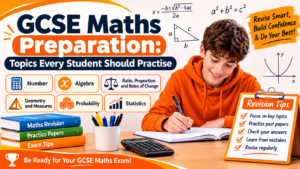
GCSE Maths preparation goes better when you know what to practise and how to practise it. The subject is wide, and many students feel unsure where to start. The exam does return to the same core areas each year. If you build strong skills in those areas, you will feel calmer and more ready on exam day.
This guide lists the key topics, explains why each one matters, and gives simple revision tips.

GCSE Maths Preparation: Topics Every Student Should Practise Read Post »

Scroll to Top